Latest News

An intermediary deducted 3.5% from a freelancer’s pay for arranging an assignment. The Arnhem-Leeuwarden Court of Appeal held that the fee breached Dutch law. The case shows why intermediaries and marketplace operators need to look at what the fee buys and how the assignment works in practice.

Preparing for 2027 starts with understanding how your freelance arrangements work today. This guide helps clients identify what to check, which questions need a closer look and what to resolve before approving or renewing an assignment. The budget is approved, the freelancer is available and last year’s agreement is ready to reuse. Before signing, ask one more question: does the proposed arrangement still make sense as freelance work? Start by comparing the agreement with how the work will actually be done. Have the duties changed? Who will direct the work? If an intermediary is involved, what will it be responsible for? The checks below help you spot what needs a closer look before you sign.

An FMS operator combines mediation between clients and freelancers with the administration of assignments through a Freelance Management System. In this model, the client and freelancer contract directly for the work. The operator supports their engagement without becoming the contractor responsible for delivering the assignment. A client needs an independent engineer. A business introduces a suitable professional, helps collect the documents and supports the agreement and invoicing. The engineer delivers the services directly to the client. The business remains involved throughout the assignment, but it has not employed the engineer or undertaken to deliver the engineering work itself. How should that role be described? FMS operator provides a useful name. In this article, it means a business that uses a Freelance Management System to connect clients and freelancers and administer their direct engagements. It builds on the mediation role—bemiddeling in Dutch—which Zooly has also described as the broker role. The term describes a business model. It is not a new statutory status.

“Close the gap before the climb.” Imagine hearing that in your earpiece with a teammate on your wheel. The team director has spotted a move up the road, and you have seconds to respond. The instruction tells you what the team needs in that moment. To understand the rider’s working relationship, it helps to look at what happens after the finish. The men’s WorldTour rules allow teams to engage self-employed riders where the applicable law permits it, and they set conditions for pay and insurance. So who sets the rider’s training schedule between races? Can the rider negotiate an extra commitment? Who bears the cost if an injury keeps them off the bike? Together, those details help show how much independence the rider has in practice and who carries the financial risk. UCI Road Regulations, Article 2.15.115 bis

A creditor can have a bailiff freeze money that a client owes to a freelancer. The protected minimum that applies to wages does not automatically cover ordinary freelance invoices. Court protection may be available for recurring payments, while money already in a bank account follows different rules. The work is finished. The invoice has been approved. The freelancer is counting on the payment to cover rent, groceries and next month’s business expenses. Then the client receives a notice from a bailiff. A creditor has placed the payment under seizure, so it cannot simply be paid to the freelancer. Does anything have to be left for living costs? For an ordinary freelance invoice, the answer is not automatically. Dutch law distinguishes between wages, business payments and money held in a bank account. That distinction can make a considerable difference when a payment is suddenly stopped.

A broker that only brings clients and independent freelancers together does not need Wtta admission for that activity. The admission requirement concerns the supply of workers who work under another party’s supervision and direction. Once the broker’s activity is clear, the next question is which SNA module, if any, is relevant.

There is considerable confusion about when a freelancer is genuinely a freelancer. Since 1 January 2025, the Dutch Tax Administration has once again been fully enforcing the classification of working relationships. Anyone engaging a freelancer through an intermediary that actually operates as a secondment or temporary employment agency is, legally, no longer engaging a freelancer, but an employee of that intermediary. The distinction between intermediation and the supply of workers is crucial here.

In het derde kwartaal van 2026 was 82% van de nieuwe Nederlandse bedrijfsvestigingen een zzp’er, zo blijkt uit cijfers van de Kamer van Koophandel (KvK) van 22 oktober. Het aandeel is bijzonder hoog in het onderwijs, de bouw en de zorg. Voor opdrachtgevers is het onderwerp niet het volume aan nieuwe zzp’ers, maar de juridische consequentie: de handhaving van de Wet DBA is hervat en de Belastingdienst beoordeelt actief of een opdracht neerkomt op schijnzelfstandigheid. De praktische opgave is om echte zelfstandigheid aantoonbaar te maken — met heldere afspraken, een onderbouwde beoordeling en dossiervorming die laat zien hoe de samenwerking daadwerkelijk verloopt.

The number of freelancers in the Netherlands is falling, but that decline does not mean demand for flexibility among clients has disappeared. According to figures from the Dutch Centraal Bureau voor de Statistiek (Statistics Netherlands, CBS), and an analysis by De Nederlandsche Bank (DNB) show that many former freelancers quickly find work elsewhere, often in a different sector. For clients, this raises a two-part question: how do you maintain continuity in your hiring chain, and how do you prevent the shift towards other contract forms from increasing the risk of misclassification?

For freelancers, directors and major shareholders (DGAs) and their clients in the Netherlands, few legal concepts matter more than “leiding en toezicht” — supervision and direction. It is the pivot on which the WTTA admission requirement turns, and it is the same factual test that determines whether someone is an employee, a temporary agency worker, or a genuinely independent contractor. The Dutch Nederlandse Autoriteit Uitleenmarkt (NAU) puts the question starkly: “De hamvraag is of iemand onder leiding en toezicht van een opdrachtgever werkt. Zo nee, dan geldt de Wtta niet.” If the answer is yes, the entity may be making labour available (ter beschikking stellen) and may need an NAU admission by 1 January 2028. The legal form — zzp’er, BV, DGA or intermediary — does not matter; “de afspraken en de manier waarop u in de praktijk werkt, zijn hierbij bepalend”. This article explains what “leiding en toezicht” means, how courts apply it, and what it influences for freelancers and their clients.

Concerns about the proposed Zelfstandigenwet highlight an important distinction: following professional standards is not automatically evidence of client control. Classification depends on the nature of the instructions and the working relationship as a whole.
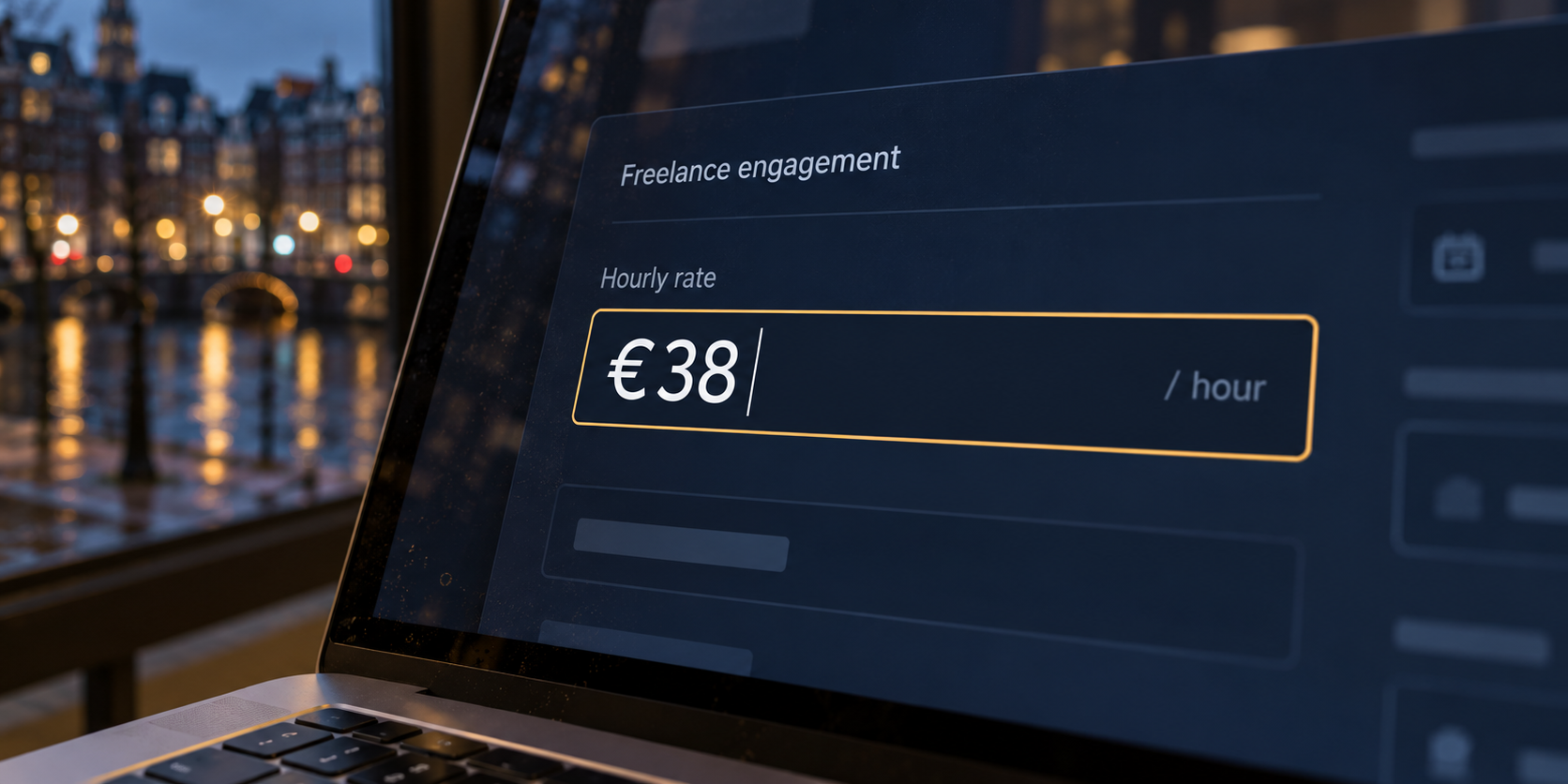
A new Dutch employment presumption takes effect on 31 December 2026. Pay your freelancers more than €38 otherwise freelancers can require the client to demonstrate that the relationship is not an employment contract.